
Agriculture Sector of INDIA: Current Scenario & Expectations from Budget 2025
Published on January 31, 2025 , farmntrade
Current Environment
At INR 23 lakh Crore, India’s Gross Value Added (GVA) from agriculture contributes 18% of the total GVA. Agriculture and allied sectors account for 46% of the total employment in the country making it the critical backbone of the Indian economy.
India contributes around 11% to the world’s agricultural production, with a bare share of 2-3% in international agricultural food exports and a still lesser percentage contribution of 1-2% in processed food exports. Total Indian agricultural exports for FY2024 stood at INR 2.2 lakh crore; lower agricultural exports during FY2023; this 5% drop is in comparison to FY2023 on account of export restrictions on non-basmati rice and tightened regulations on other products.
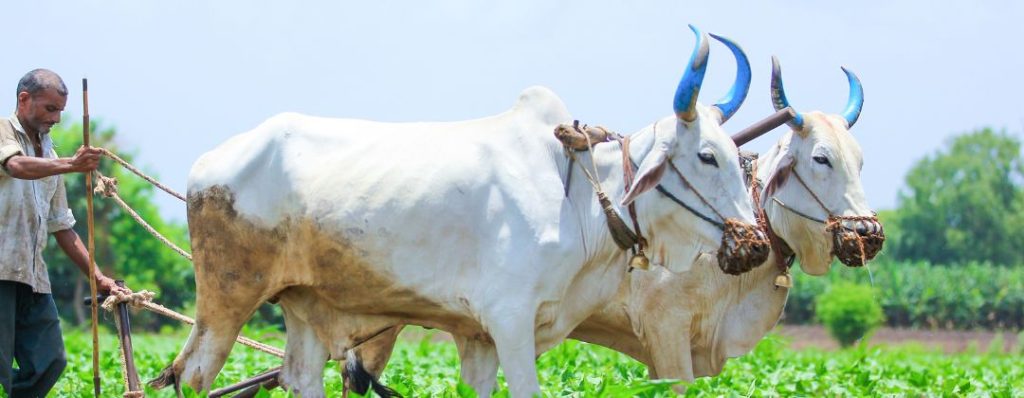
There has been the introduction of many schemes by the Government to enhance agriculture such as, the Rashtriya Krishi Vikas Yojana, the Mission for Integrated Development of Horticulture, and many others that aim to improve the agricultural value chain. There are also specific schemes that aim to tackle the special issues like: Per Drop More Crop – Send More Crop sub-mission on agriculture mechanization and the Agriculture Infrastructure Fund. The initiatives such as Digital Agriculture Mission and Agristack are also aimed to resolve the policy Gap of technology advancement in agriculture.
These changes reflect a growing need for high nutrition products like horticultural products as there is growing per capita income and changing consumption habits.
What we can expect from Budget 2025?

Amidst scientists’ moves to reinvent the meaning of things, farmers, stakeholders, and agricultural companies are asking loudly for more supportive policies and directions to solve problems of Minimum Support Price (MSP), financial support, market reforms, modernization, market access, and selective investments.
Key Focus Areas:
1. Reforms in MSP Cost and Financial Support
– Farmers and agri-activists have demanded that the MSP is universal and should be implemented for all crops instead of the present 23 commodities.
– Other proposals, however, include a remedy against non-implementation of amended recommendations of the MS Swaminathan Commission, by obtaining a minimum support price, or MSP, costing at least 50% above the comprehensive cost of production.
– Provisions in favour of farmers will be cooked up to put costs on the government; “money will be paid by De Facto Compensation, for the equivalent of anything an artificial legal person can get, that will wipe out the entire debt to a private company for power.”
2. Rich Returns from Agri-Tech & Machine Usage
– Heated demands include increased incentives for AI-driven precision farming, drones, and other automation types of mechanization for higher yields.
– A minimum of 50% subsidy on renting machinery from private players will be provided to farmers.
– More on-the-ground initiatives will make digital agriculture central to improving efficiency and sustainability.
3. Improving Cold Storage & Logistics
– Those investments must go into cold storage, warehousing, and logistic systems to reduce post-harvest losses.
– Project and reinforce market linkages and supply chains to better realize price for farmers.
4. Growth of Sustainable & Organic Farming
– Exclusive budget for organic and chemical-free farming.
– Water-saving irrigation methods/technologies along with climate-resilient seed varieties.
– Research and development of biofuels as an alternative to chemical inputs.
5. Taxation Reform for Lower Input Costs
– Reduction of the GST on machines, fertilizers, seeds, and medicines primarily used for agriculture.
– Reduce the GST on pesticides from 18% to 5%, to lessen the burden on farmers.
– Reforming agricultural income-related taxation policies.
6. Renewable Energy & Sustainability Solutions
– Solar panels should be installed on farms through the government’s help.
– Interlinking rivers to achieve an integrated approach to water management.
– Deployment of The Mahatma Gandhi National Rural Employment Guarantee Scheme (MGNREGS) labourers for agricultural activities, increasing availability.
How farmntrade Can Benefit India’s Agricultural Sector?
farmntrade is set to change the way agriculture progresses. It is a trustworthy B2B platform from around the world to make agriculture trading easy, safe, and efficient. Following is how farmntrade can benefit farmers and agribusiness in India:
Here, buyers and sellers are verified:
farmntrade collaborates with some of the most trusted agricultural distributors to ensure that the buyers and sellers are real and verified, minimizing the risk of fraud.
farmntrade has an exactly balanced marketplace:
Unlike most other agriculture B2B platforms, it has never allowed one side to outnumber the other, thereby creating high leverage for either parties and not allowing price exploitation; thus, a fair competitive atmosphere is ensured.
Wholesale Market Access:
In this situation, the farmers together with bulk buyers are given access to a great variety of agricultural products at wholesale rates, to offer them the best deal.
Safe & Secure Transactions:
The platform provides a fully integrated secure mechanism for payment, enabling easy and safe transactions in trade.
Global reach at local impact:
It operates in the USA, Australia, Asia and Europe, wherein direct access is given from Indian farmers and agribusinesses to international markets.
By always assuring high-quality production that is competitive on price and made possible through the use of farmntrade, Indian farmers can make better marketing available, enjoy less risk of dependence on middlemen, and sell their produce at improved prices. The system that performs online trade regarding an efficient and open way exists to empower the agricultural sector really matching the vision of the modernization of India for a global competitiveness drive.
Final Note
The above information is based on publicly available data and industry expectations. The actual provisions and reforms will be confirmed once the Union Budget 2025 is officially presented on February 1, 2025.